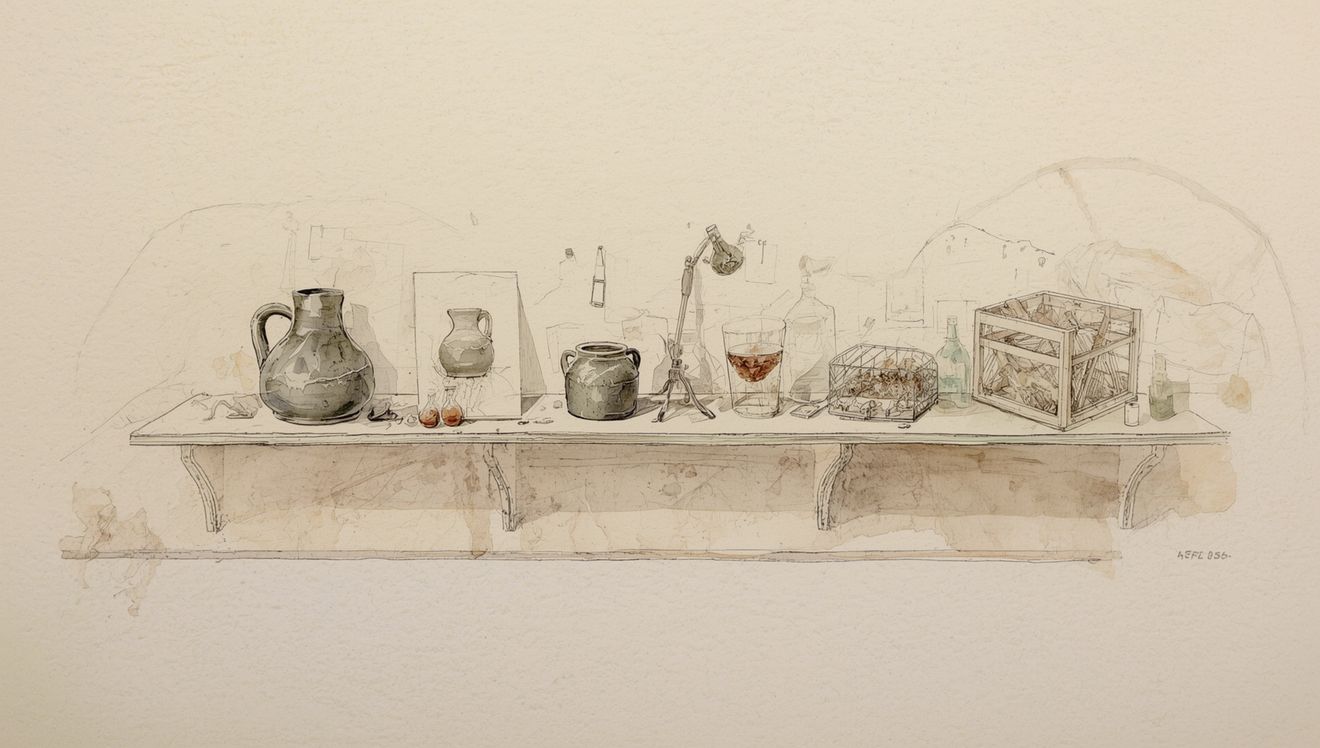

The same person, as six places remember them.
Your inbox
What they asked for and what you promised, buried in a thread you can only find if you remember the right word to search for.
How you met and what they do. Messages that never reach your inbox, and stop existing the moment you close the tab.
The spreadsheet
Names, numbers, and a column called Status that was last honest a few months ago.
Your notebook
What they're actually worried about, written down while they said it. The most useful record you keep, and the only one nobody else can read.
The quote
A document on your laptop with a version number on the end, and no certainty that it's the copy you sent.
The accounts
Where they finally turn up as a real customer — months after the first conversation, with none of that conversation attached.
1
Following up depends on remembering
You said you'd come back to them on Thursday. Thursday was busy. There's nothing anywhere that says it didn't happen, so it simply doesn't — and the only person who could have noticed is the one who forgot.
2
You can't see who's waiting on you
Somebody is sitting on a quote. Somebody else asked a question last week. To find out who, you go back through your sent items — and you'd have to do it again tomorrow to still be sure.
3
Good leads go quiet and stay quiet
They went cold because nothing came back to them for six weeks, not because they weren't interested. By the time they cross your mind again, they've bought from someone who stayed in touch.
4
It only works while you're holding all of it
The real picture is in your head, so nobody can help with it and nothing can be handed over. It holds up until a busy fortnight, a holiday, or the week you finally take someone on to do it with you.

This isn't a CRM you have to be talked into, and nothing you already use gets taken away. Your inbox stays your inbox, your quotes stay where you write them, and the notebook is still allowed to exist.
What gets built is the joining-up: one flow that runs from first enquiry through conversation, quote and decision to signed client, with each of those tools handing the next one what it needs. A person enters once and moves along it, instead of being written down again at every stage — and you can see where everyone is without asking anybody.
1
Agree what counts as a prospect
One list of the people you're actually talking to, and a handful of plain stages they move between — enquired, talked to, quoted, decided. No scoring, no funnel. Just a shared answer to "where are we with them?" that doesn't depend on who you ask.
2
Connect what you already use
Email, your quote documents and whatever holds the names today are wired together, one join at a time, so a reply or a sent quote updates the picture by itself. Where something genuinely can't be connected — LinkedIn, the notebook — the handover is made a two-second job rather than a thing to remember.
3
Run it as one flow
Everyone in progress is on one screen, in order of who needs something from you. Anything that's gone quiet puts its hand up while it's still worth chasing, and when a prospect becomes a customer they carry their history with them instead of starting again in the accounts.
It's built in stages, in the order that pays back first — usually just making the people who are waiting on you visible. Each stage stands on its own, nothing stops while it's being done, and you can stop after any one of them and still be better off than you were.
If you recognise the six places above, and you've lost someone good to a follow-up that never happened, it's worth a conversation. Tell me how enquiries reach you today and where they tend to go quiet, and I'll tell you plainly what joining it up would involve.
Start a conversation